

USGS
By Anthony Pagano, University of California, Santa Cruz, The Conversation
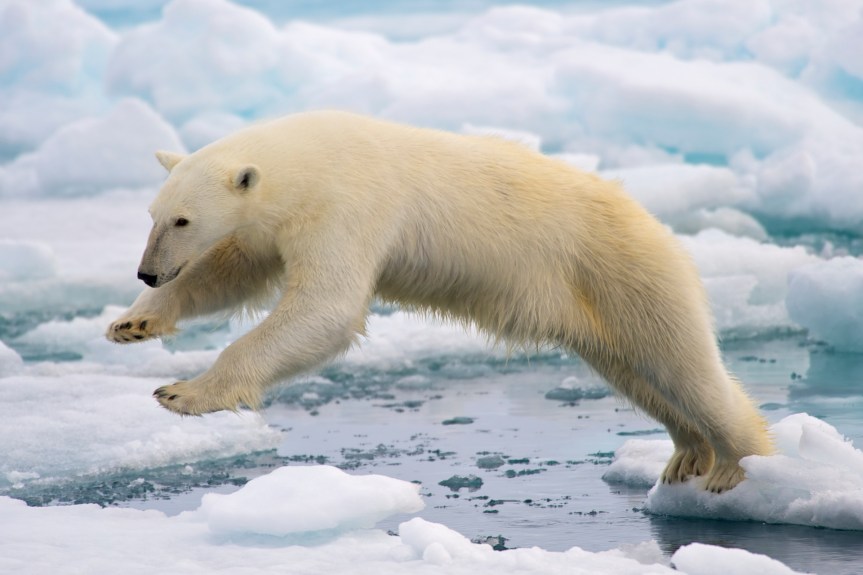
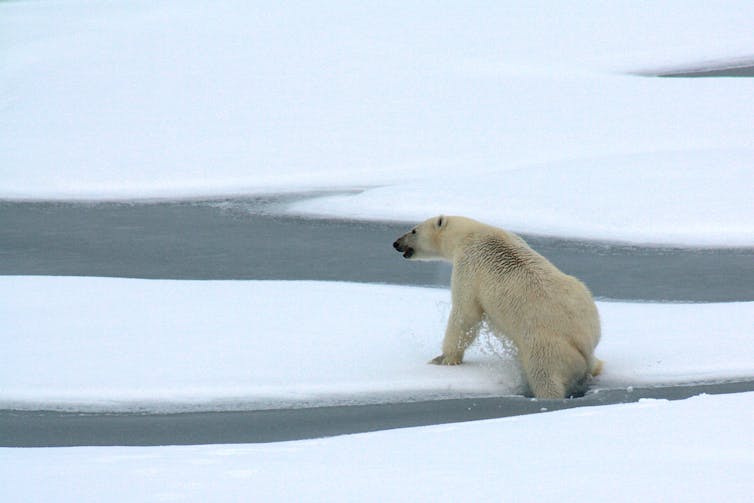
Polar bears live in a remote and inhospitable environment far from most human settlements. For most biologists, opportunities to observe these animals are fleeting. In fact, scientists’ main resources for understanding basic behaviors of polar bears on sea ice are observations of polar bear behavior and foraging rates made by Canadian biologist Ian Stirling more than 40 years ago, combined with local traditional knowledge from Arctic indigenous peoples.
With ongoing and forecasted declines in Arctic sea ice, there is a greater need to understand how polar bears use sea ice and will respond to anticipated environmental changes. To answer this question, I have been studying polar bears’ physiology and foraging behavior in the Arctic since 2013 with colleagues from the U.S. Geological Survey, the University of California at Santa Cruz…
View original post 1,014 more words
 Ravenhawks' Magazine Magick for Mind Body and Soul